How Much Water Should You Drink Per Day?
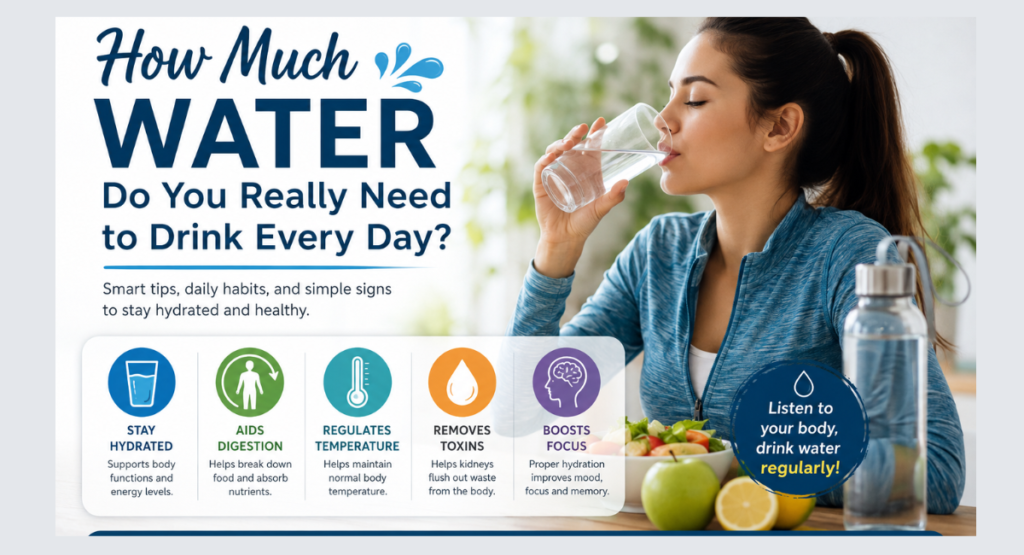
Water is essential for the body to function correctly. But how much water should you drink per day? A commonly suggested answer is eight glasses of water per day. But that might not apply to you – your needs can vary depending on many different factors. Rather than trying to measure exactly how much fluid you need to consume, it can be more effective to assess your own hydration and fluid loss. How much water should I drink each day? There is no one-size-fits-all answer for how much water you should drink. Your total fluid intake depends on several different factors, such as your sex, age, activity levels, the weather, your diet, and your overall health. You should aim to get most of your fluids from drinking water, but other liquids, and even food, contribute to your total amount. You may need more fluids if you are: • Exercising or physically active • In a hot climate • Sweating profusely • Sick with a fever • Pregnant or breastfeeding • Spending long periods outside • Eating a high-salt or high-protein diet Rather than trying to measure your fluid intake in detail, you can focus on how much you need to stay hydrated. Is it best to drink water in sips throughout the day? Yes, it is best to spread out your fluid intake as you go about your daily life. You can encourage yourself to drink more water by making simple changes to your routine. Having a glass of water when you wake up, having water with your meals, and keeping a water bottle or glass with you at your workplace or while studying are simple ways to ensure that you stay hydrated. A sample schedule could look like this: • Water when you wake up • Water with breakfast • Water during the morning • Water with lunch • Water when exercising • Water with dinner • Less water close to bedtime if you find that you need to urinate frequently at night Is it best to drink water first thing in the morning? Drinking water when you wake up is a good way to rehydrate after a night’s sleep, and it can help you start your day off right. However, there are a number of myths about the benefits of drinking water first thing in the morning. Some suggest that drinking water first thing boosts your metabolism, flushes out toxins, or even significantly impacts your hormones. However, there is little evidence to support such claims. What drinking water does after you wake up is replace the fluids that your body loses throughout the night. You may experience more frequent trips to the toilet if you drink water before bed, which is why water is generally not advisable to drink close to sleep. Should I drink water with my meals? Yes, you can drink water with your meals. There is a myth that drinking water with your meals will dilute your stomach acids, preventing you from digesting your food, but it is false. In fact, water can aid in digestion. It can also reduce bloating and promote healthy eating habits by helping you feel full faster – especially if you drink it before you eat. Therefore, there is no reason for healthy people to avoid drinking water with meals. How can I tell if I am drinking enough water? You do not need to be obsessive about measuring your water intake. Your body will often tell you when it needs fluids. The most reliable indicator that you are sufficiently hydrated is your urine. If it is consistently pale yellow, you are well-hydrated. If it is dark yellow, you may need to drink more fluids. However, some medications, supplements, or diseases can affect the color of your urine. If you notice that your urine is consistently very dark, you should speak to a medical professional. Another indicator of good hydration is that you generally do not feel excessively thirsty throughout the day. If you feel frequently thirsty, especially in hot weather or when exercising, you may need to drink more fluids. However, this is not always the case – some people, such as the elderly, exercising people, and those with specific health conditions, may experience frequent thirst even when they are well-hydrated. If you have been exercising and find that you have lost a lot of weight during your session, most of it is likely to be water that you have lost through sweat. Therefore, you should drink more fluids after you finish your workout. People who exercise intensely should pay particular attention to their fluid intake. If you are a competitive athlete who exercises regularly and sweats heavily, you may wish to track your fluid intake more closely rather than relying only on your sense of thirst. Can I drink too much water? Yes, in fact, drinking too much water can be dangerous. The issue with drinking too much water is that it can lead to a severe electrolyte imbalance. Your blood can become too diluted, which can cause you to experience a range of unpleasant symptoms, such as headaches, nausea, vomiting, and confusion. In extreme cases, it can even be fatal. This is another reason why you should not be obsessive about your water intake. Water is essential for your survival, but drinking too much water is not healthy. The extreme sports and endurance running communities are generally quite aware of the risks associated with both dehydration and overhydration and try to carefully track their fluid intake accordingly. Does coffee count towards my daily water intake? Coffee and tea are made from water, so they do count towards your fluid intake. However, they also contain caffeine, a diuretic that increases urine production. Most of the water in coffee and tea is still beneficial, though, and you do not need to drink an additional glass of water for every cup of coffee you consume. It is still better to prioritize plain water over coffee, since coffee contains calories