Healthy Habits

how-much-water-should-you-drink-per-day
Healthy Habits

How Much Water Should You Drink Per Day?

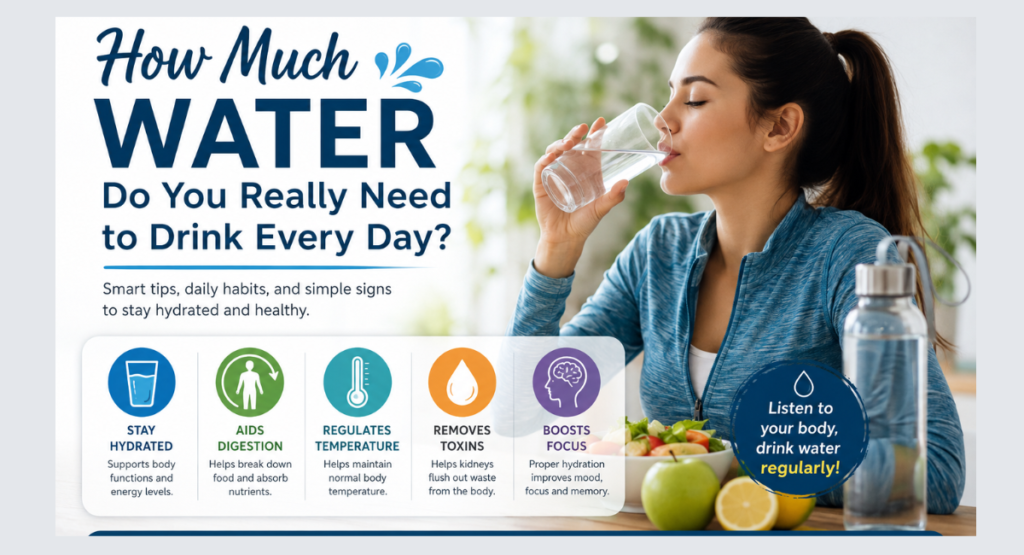
Water is essential for the body to function correctly. But how much water should you drink per day? A commonly suggested answer is eight glasses of water per day. But that might not apply to you – your needs can vary depending on many different factors. Rather than trying to measure exactly how much fluid you need to consume, it can be more effective to assess your own hydration and fluid loss. How much water should I drink each day? There is no one-size-fits-all answer for how much water you should drink. Your total fluid intake depends on several different factors, such as your sex, age, activity levels, the weather, your diet, and your overall health. You should aim to get most of your fluids from drinking water, but other liquids, and even food, contribute to your total amount. You may need more fluids if you are: • Exercising or physically active • In a hot climate • Sweating profusely • Sick with a fever • Pregnant or breastfeeding • Spending long periods outside • Eating a high-salt or high-protein diet Rather than trying to measure your fluid intake in detail, you can focus on how much you need to stay hydrated. Is it best to drink water in sips throughout the day? Yes, it is best to spread out your fluid intake as you go about your daily life. You can encourage yourself to drink more water by making simple changes to your routine. Having a glass of water when you wake up, having water with your meals, and keeping a water bottle or glass with you at your workplace or while studying are simple ways to ensure that you stay hydrated. A sample schedule could look like this: • Water when you wake up • Water with breakfast • Water during the morning • Water with lunch • Water when exercising • Water with dinner • Less water close to bedtime if you find that you need to urinate frequently at night Is it best to drink water first thing in the morning? Drinking water when you wake up is a good way to rehydrate after a night’s sleep, and it can help you start your day off right. However, there are a number of myths about the benefits of drinking water first thing in the morning. Some suggest that drinking water first thing boosts your metabolism, flushes out toxins, or even significantly impacts your hormones. However, there is little evidence to support such claims. What drinking water does after you wake up is replace the fluids that your body loses throughout the night. You may experience more frequent trips to the toilet if you drink water before bed, which is why water is generally not advisable to drink close to sleep. Should I drink water with my meals? Yes, you can drink water with your meals. There is a myth that drinking water with your meals will dilute your stomach acids, preventing you from digesting your food, but it is false. In fact, water can aid in digestion. It can also reduce bloating and promote healthy eating habits by helping you feel full faster – especially if you drink it before you eat. Therefore, there is no reason for healthy people to avoid drinking water with meals. How can I tell if I am drinking enough water? You do not need to be obsessive about measuring your water intake. Your body will often tell you when it needs fluids. The most reliable indicator that you are sufficiently hydrated is your urine. If it is consistently pale yellow, you are well-hydrated. If it is dark yellow, you may need to drink more fluids. However, some medications, supplements, or diseases can affect the color of your urine. If you notice that your urine is consistently very dark, you should speak to a medical professional. Another indicator of good hydration is that you generally do not feel excessively thirsty throughout the day. If you feel frequently thirsty, especially in hot weather or when exercising, you may need to drink more fluids. However, this is not always the case – some people, such as the elderly, exercising people, and those with specific health conditions, may experience frequent thirst even when they are well-hydrated. If you have been exercising and find that you have lost a lot of weight during your session, most of it is likely to be water that you have lost through sweat. Therefore, you should drink more fluids after you finish your workout. People who exercise intensely should pay particular attention to their fluid intake. If you are a competitive athlete who exercises regularly and sweats heavily, you may wish to track your fluid intake more closely rather than relying only on your sense of thirst. Can I drink too much water? Yes, in fact, drinking too much water can be dangerous. The issue with drinking too much water is that it can lead to a severe electrolyte imbalance. Your blood can become too diluted, which can cause you to experience a range of unpleasant symptoms, such as headaches, nausea, vomiting, and confusion. In extreme cases, it can even be fatal. This is another reason why you should not be obsessive about your water intake. Water is essential for your survival, but drinking too much water is not healthy. The extreme sports and endurance running communities are generally quite aware of the risks associated with both dehydration and overhydration and try to carefully track their fluid intake accordingly. Does coffee count towards my daily water intake? Coffee and tea are made from water, so they do count towards your fluid intake. However, they also contain caffeine, a diuretic that increases urine production. Most of the water in coffee and tea is still beneficial, though, and you do not need to drink an additional glass of water for every cup of coffee you consume. It is still better to prioritize plain water over coffee, since coffee contains calories


dicipline image
Healthy Habits

How to Be Disciplined in Life: 8 Powerful Habits for Success

Have you ever wondered why some people accomplish their goals while others give up in the middle of the journey? How to Be Disciplined in Life? The secret to success is self-discipline. It is a powerful skill that enables you to do what you don’t want to do in order to achieve your goals. Being disciplined allows you to wake up early in the morning, stay focused, eat healthy meals, and do other necessary things to be successful. Fortunately, discipline is not a trait that you are born with; instead, it is something you can acquire. In this guide, you will discover how to be disciplined in life. Learn how to be disciplined in life with 8 practical habits that improve productivity, build self-control, and help you achieve lasting success 1. Set Clear Goals The first step in learning how to be disciplined in life is to set your goals. Without well-defined goals, it may be challenging to know what you want or where you want to go. To set realistic and achievable goals: Set SMART goals instead of general and vague goals. For instance, instead of saying, “I want to be fit,” set a goal such as, “I will walk for 30 minutes every morning for the next 30 days.” Track your goals by writing them down and setting deadlines for each of them Revise your goals on a weekly basis. 2.Set a Daily Routine The second step in learning how to be disciplined in life is to set a daily routine. A routine is helpful because it sets you on a consistent path that minimizes distractions and helps you avoid wasting time. Some of the routines that successful people follow include waking up early in the morning, exercising for at least 20 minutes, meditating, having healthy breakfast, and going to bed early at night. 3. Get Rid of Distractions How to be disciplined in life? One of the keys to discipline is to get rid of distractions. Distractions take away your valuable time and energy. You should avoid distractions such as unimportant phone calls and texts, and social media. Here are a few ways to minimize distractions in your life: Always lock your phone when you want to focus on an important task. Use apps to block distracting websites and social media. Always work in a distraction-free environment when handling important tasks. Avoid multitasking as much as possible. 4. Be Productive With Your Time Your time is the most valuable asset you own. You should use it wisely and purposefully instead of wasting it on meaningless activities. The following time management tips will help you be more productive: Set priorities. Focus on important tasks instead of engaging in unimportant tasks. Set a to-do list. This will help you determine what needs to be done. Always work in time blocks and avoid multitasking. Limit social media use during work hours. 5. Create Small Daily Habits Habits help you become more disciplined in life. However, it is important not to set very high expectations when creating habits. The goal should be to adopt healthy patterns and behaviors little by little rather than trying to change everything at once. Some important habits to develop include: Reading every day. Drinking more water. Exercising regularly. Practicing savings. Keeping a journal. 6. Stay Consistent How to be disciplined in life? Staying consistent is very important if you want to achieve consistency in everything you do. Most successful people are disciplined because they always find ways to get back on track whenever they fall. Here are some important things to keep in mind when trying to stay consistent: Never miss twice in a row. Always focus on progress instead of perfection. Celebrate small wins as you work towards your goals. Learn from your mistakes and use them as teaching tools. 7. Take Care of Your Health If you want to learn how to be disciplined in life, it is important to focus on your physical health. Poor health often makes it difficult to develop good character and habits. It is important to maintain good health in order to boost your level of discipline. Here are some of the most important steps to take: Sleep for at least 7 hours every night. Eat healthy meals. Exercise regularly. Drink enough water. Take care of your mental health by talking to a counsellor, praying, and meditating. 8. Adopt a Positive Attitude Your attitude plays a significant role in determining your level of discipline. You will find it hard to be more disciplined in life if you have negative thoughts about yourself. You should always believe that you are capable of achieving your goals. The following strategies can help you adopt a positive attitude. Try to overcome negative thoughts about your goals and abilities. Make an effort to learn from your failures. Avoid keeping bad company. Always surround yourself with positive people. Focus on the good things happening in your life. Keep reading inspirational material. Keep your goals in mind at all times. Benefits of Being More Disciplined in Life Learning how to be disciplined in life brings numerous benefits, including: Better health. Increased productivity. Stronger self-esteem and positive attitude. Better financial status. Better grades. Improved relationships. Less stress. Overall greater happiness and success in life. Common Mistakes That Make People Less Disciplined Here are some of the most common mistakes that may prevent you from being more disciplined Setting too high expectations. Waiting for motivation. Putting off important tasks for later. Comparing yourself with other people. Trying to change everything at once. Giving up on your goals after failing. Final Thoughts on How to Be Disciplined in Life Learning how to be disciplined in life can help you achieve your goals and be more successful in life. You can be more disciplined in life by setting goals, creating a daily routine, eliminating distractions, being productive with your time, developing positive habits, staying consistent, taking care of your health, and adopting the right mindset. Remember that motivation is

Healthy Habits

Daily Healthy Habits: Guide to Living a Healthy, Happy, and Productive Life

Healthy habits are essential for a successful and happy life. Most successful people attribute their achievements to developing positive daily habits and having the discipline to follow them. Healthy habits require you to wake up early, have a healthy breakfast, work out, pray, read, etc. They also involve avoiding bad habits and staying clean. Most importantly, healthy habits allow you to be more productive and happier throughout the day. Even though many people are searching for a magic pill or quick, easy solutions that would make them healthier and happier in a short period of time, healthy habits require discipline and consistency in your daily routine. Fortunately, you do not need to spend a fortune on expensive equipment or invest a lot of time in going to the gym. To be healthy, you just need to practice healthy habits on a daily basis. Below you will find a list of all the essential healthy habits that you should develop.  1. Wake Up Early (Daily Healthy Habits) Waking up early is one of the most important heathy habits that will allow you to be more successful and happier. People who wake up early have more time to accomplish important and necessary tasks and plan their day. In addition, it is proven that waking up early has numerous health benefits.  Benefits: • You can plan your day and complete various tasks. • It reduces morning stress. • It improves time management. • You have time for exercising and eating healthy. • It allows you to get up earlier every day and wake up less tired because your body will get used to the early morning routine.  Tips: • Try to go to bed at the same time every night. • Do not use your phone at bedtime. • Move your alarm clock away from your bed. • Wake up at the same time every day.  2. Prayer or Being Positive in the Morning It is important to pray or meditate in the morning to be happy and productive throughout the day. Prayer or meditation helps you be calm and positive. If you are religious, you can say your daily prayer in the morning. If you do not want to, you can simply take a moment to think about all the good things you are grateful for in your life.  Benefits: • It promotes calmness. • It reduces stress. • It helps you be positive. • It improves focus. • It helps you achieve your goals. • It strengthens your faith.  3. Drink Water in the Morning Drinking water after waking up is crucial because your body needs it in order to function properly. Water flushes out the toxins from your body and makes you feel active and energetic. If you are not used to doing that, start drinking 1 or 2 glasses of water every morning when you wake up and before eating anything else.  Benefits: • It helps flush out toxins from your body. • It hydrates your body and makes it function properly. • It helps with digestion. • It makes your body more energetic. • It strengthens your kidneys.  Tip: Bring a water bottle with you wherever you go and try to drink water often.    4. Exercise Every Day Exercise is essential if you want to be healthy and happy. Working out and exercising improves your health, increases your energy level, and makes you more confident. If you do not want to force yourself to go to the gym, you can jog outside or do simple body exercises for 30 minutes every day.  Benefits: • It improves your heart and circulatory system. • It improves your flexibility, range of motion, and posture. • It strengthens your bones and muscles. • It helps you lose weight and remain fit. • It improves your mood. • It makes you sleep better and for longer hours. • It reduces the risks of developing various diseases that may be dangerous. • It prevents stress.  5. Eat a Healthy Breakfast Eating a healthy breakfast gives you energy that you will need for the whole day. In addition, people that eat healthy in the morning are more likely to be focused and achieve their goals because they have a clear mind and do not feel hungry.  Benefits: • It gives you energy for the whole day. • It makes you feel healthy and strong. • It improves brain activity. • It makes sure that you eat healthy and do not skip any meals.  6. Have a To-Do List You should make a to-do list every day because that way, you will be able to organize your tasks according to their level of importance. In addition, writing your to-do list will help you avoid missing any of your daily tasks.  Benefits: • It makes you highly productive and ensures that you will finish your tasks on time. • It reduces stress. • It improves your time management skills. • It motivates you.  7. Eat Healthy Meals Every Day According to Your Daily Schedule Eating healthy food every day in accordance with your schedule is essential in order to keep track of your meals. Eating healthy food is important for your health and overall appearance. Here is one example of a daily meal schedule.  Healthy Daily Meal Schedule • Breakfast: 7:00 – 8:00 • Healthy Snack: 10:00 • Lunch: 1:00 • Healthy Snack: 4:00 • Dinner: 7:00  Benefits: • It prevents overeating. • It helps you have a healthy and clear mind. • It ensures that you eat meals at regular intervals. • It makes sure that you have a balanced diet. • It improves your digestion and helps you eliminate toxins from your body.  8. Drink Water All Throughout the Day As mentioned before, water is essential for keeping your body healthy. Although you should drink water according to your own schedule and needs, your body will let you know how much water you need to drink every day, you should drink enough water

Scroll to Top